
Class 1 vs Class 2 vs Class 3 Hi-Vis: A Complete UK Guide
High-visibility clothing is one of the most critical components of workplace PPE, yet it’s often misunderstood.
Not all hi-vis garments offer the same level of protection. In the UK, high-visibility workwear is categorised into three protection levels under EN ISO 20471:
- Class 1
- Class 2
- Class 3
Choosing the wrong class can lead to non-compliance, increased risk and potential legal consequences.
If your team operates in construction, highways, utilities, rail or logistics across Bedfordshire, Hertfordshire or Buckinghamshire, understanding these classifications is essential.
This guide explains exactly what each class means and how to choose correctly.
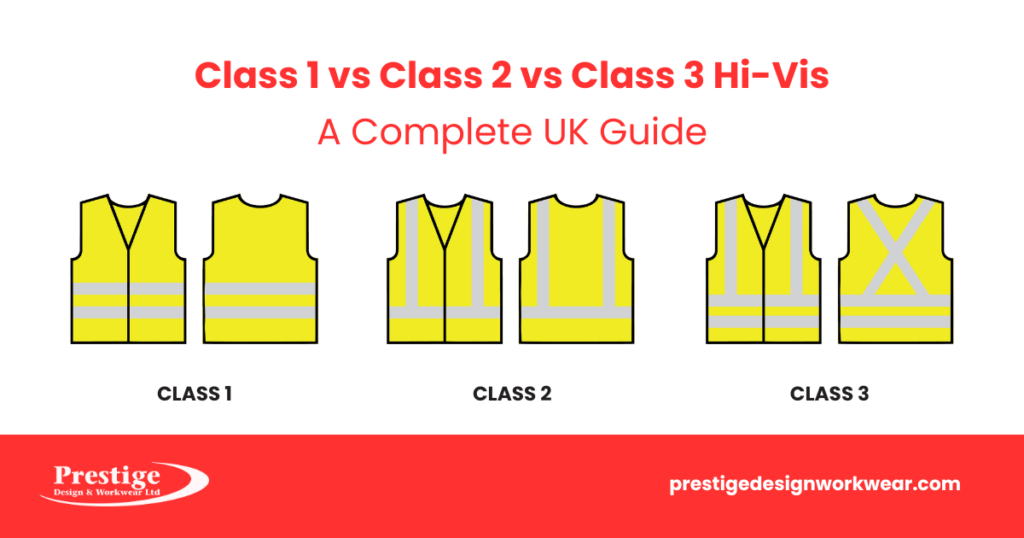

What Is EN ISO 20471?
EN ISO 20471 is the European standard governing high-visibility clothing.
It specifies:
- The minimum amount of fluorescent background material
- The minimum amount of retroreflective tape
- The placement and width of reflective strips
- The overall visibility performance of the garment
The purpose of the standard is simple:
To ensure workers are visible in daylight, low light and artificial lighting conditions.
The higher the class number, the greater the visible surface area and therefore the higher the level of protection.
Why Hi-Vis Classification Matters
Hi-vis classification isn’t about colour alone.
It directly impacts:
- Worker safety in traffic environments
- Visibility in low-light conditions
- Compliance with site rules
- Insurance validity
- Legal employer obligations
In high-risk sectors such as construction and highways common across Bedford, Milton Keynes and Luton selecting the correct class is non-negotiable.
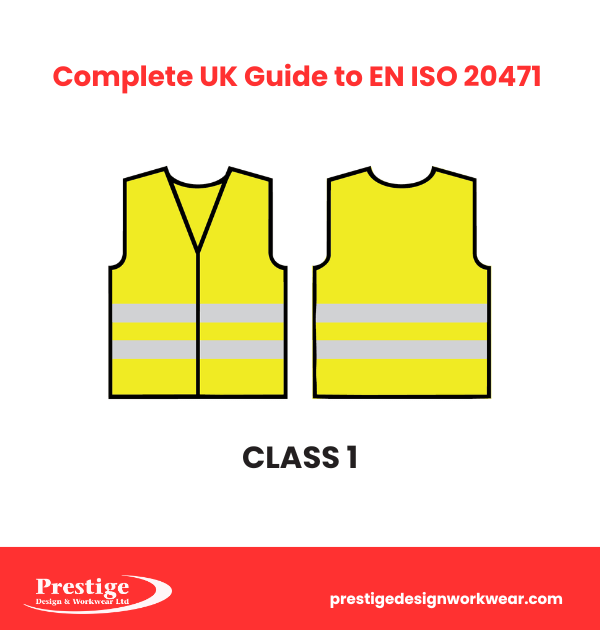
Class 1 Hi-Vis
Minimum Visibility Protection
Class 1 provides the lowest level of visibility under EN ISO 20471.
It contains the smallest amount of fluorescent and reflective material permitted by the standard.
Typically Includes:
- Hi-vis trousers
- Hi-vis shorts
- Some lightweight waistcoats
Suitable For:
- Low-risk environments
- Warehouse settings
- Private sites without traffic exposure
- Situations where visibility risk is minimal
Class 1 garments are often worn in combination with higher class upper body garments.
It is rarely suitable on active roadside or construction environments.
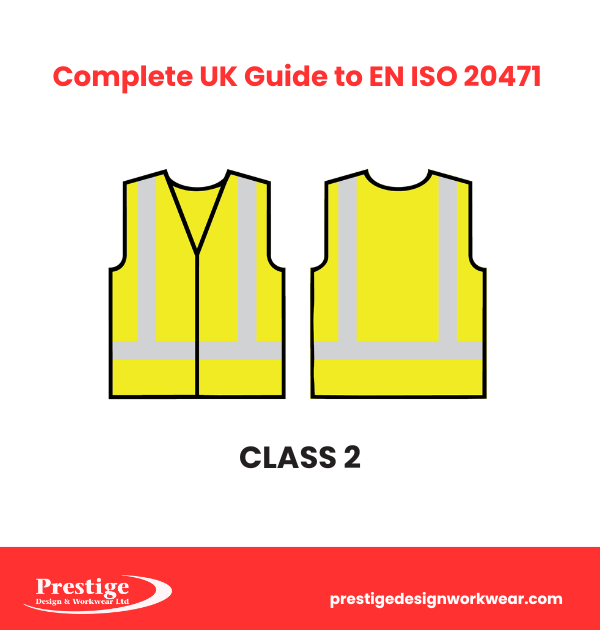
Class 2 Hi-Vis
Standard Construction Requirement
Class 2 garments provide increased visibility through greater fluorescent and reflective coverage.
This is the most required class on UK construction sites.
Common Class 2 Garments:
- Hi-vis polos
- Hi-vis sweatshirts
- Hi-vis softshell jackets
- Standard hi-vis vests
Suitable For:
- Construction sites
- Roadworks (non-motorway)
- Utility teams
- Local authority workers
- Warehousing with vehicle movement
Across Bedfordshire and Hertfordshire, Class 2 is typically the baseline requirement for site workers.
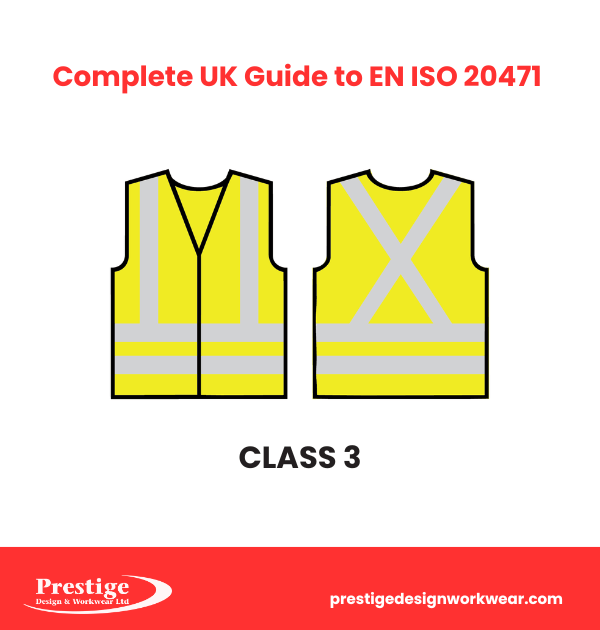
Class 3 Hi-Vis
Maximum Visibility Protection
Class 3 offers the highest level of visibility available under EN ISO 20471.
It requires the largest surface area of fluorescent material and reflective tape.
Typically Includes:
- Long-sleeve hi-vis jackets
- Hi-vis waterproof coats
- 3 in 1 hi-vis jackets
- Rail compliant garments
Required For:
- Motorways
- High speed roads
- Rail infrastructure
- High risk traffic environments
For teams working near high-speed traffic in areas such as the M1 corridor or A5 routes, Class 3 is often mandatory.
Understanding Surface Area Requirements
The difference between classes is primarily based on the amount of visible material:
- Class 1 – Lowest minimum surface area
- Class 2 – Medium minimum surface area
- Class 3 – Highest minimum surface area
This includes both:
- Fluorescent background material
- Retroreflective tape
The higher the risk of traffic exposure or poor visibility conditions, the higher the class required.
Can Hi-Vis Clothing Be Branded?
Yes, but compliance must always come first.
Branding should:
- Not cover reflective tape
- Not reduce fluorescent surface area below minimum standards
- Maintain garment certification
Improper branding can invalidate compliance.
At Prestige Design Workwear, we ensure embroidery and print placement never compromises EN ISO 20471 requirements.
Choosing the Right Hi-Vis for Your Industry
Construction & Trade
Typically, Class 2 minimum
Often paired with S3 safety boots and waterproof outerwear
Highways & Roadside
Often Class 3 required
Warehousing
Class 1 or 2 depending on vehicle movement
Rail
Rail specific Class 3 garments
Hi-Vis Workwear Across Bedfordshire, Hertfordshire & Buckinghamshire
We supply EN ISO 20471 compliant high-visibility clothing across:
- Bedford
- Luton
- Milton Keynes
- Hemel Hempstead
- St Albans
- Aylesbury
With collection available from Barton and Flitwick.
Whether you’re outfitting a small contractor team or a large infrastructure project, ensuring the correct hi-vis classification protects both your workforce and your business.
Frequently Asked Questions
Is Class 2 enough for construction?
In many cases yes but always check site specific risk assessments.
When is Class 3 mandatory?
Typically for high-speed traffic environments or motorway work.
Can I mix different hi-vis classes?
Yes, depending on garment type and risk assessment.
Does embroidery affect compliance?
Only if it reduces required reflective or fluorescent coverage.
Final Thoughts
Hi-vis classification isn’t about appearance, it’s about protection, compliance and responsibility.
Choosing the correct class ensures:
- Worker safety
- Legal compliance
- Insurance protection
- Professional credibility
If you’re unsure which classification your team requires, professional guidance is always recommended.