
S1P vs S3 Safety Boots: What’s the Difference & Which Do You Need?
Choosing the correct safety footwear is not just about comfort it’s about compliance, protection and site suitability.
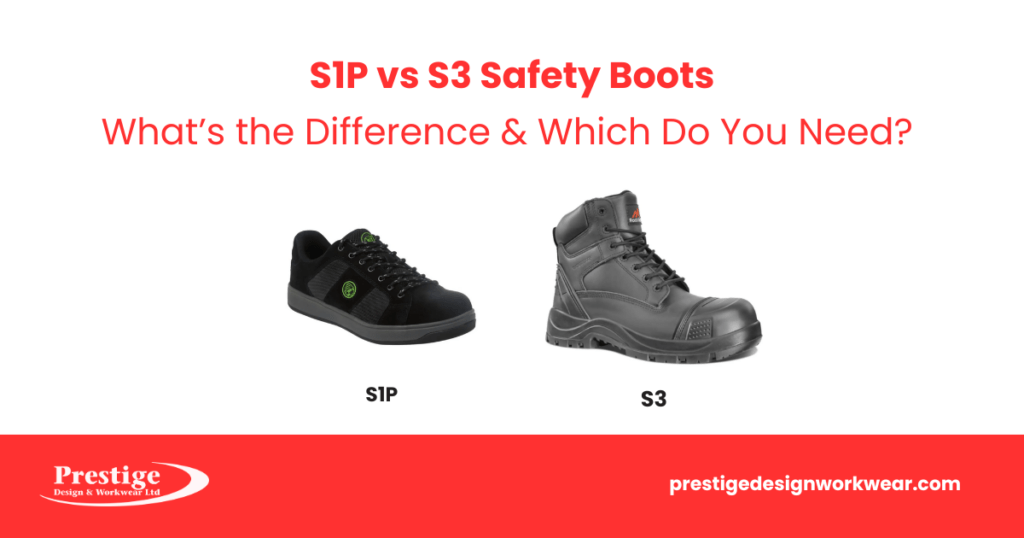
In the UK, safety boots are classified under EN ISO 20345, and two of the most common ratings you’ll see are:
- S1P
- S3
While they may look similar, the differences are significant particularly for construction and outdoor work.
If your team operates across Bedfordshire, Hertfordshire or Buckinghamshire, understanding these ratings ensures you stay compliant and protected.

What Is EN ISO 20345?
EN ISO 20345 is the European safety standard that governs protective footwear.
To meet this standard, safety boots must include:
- Toe protection (tested to 200 joules impact resistance)
- Anti-static properties
- Energy absorption in the heel
Additional ratings such as S1P and S3 indicate further protective features.
What Are S1P Safety Boots?
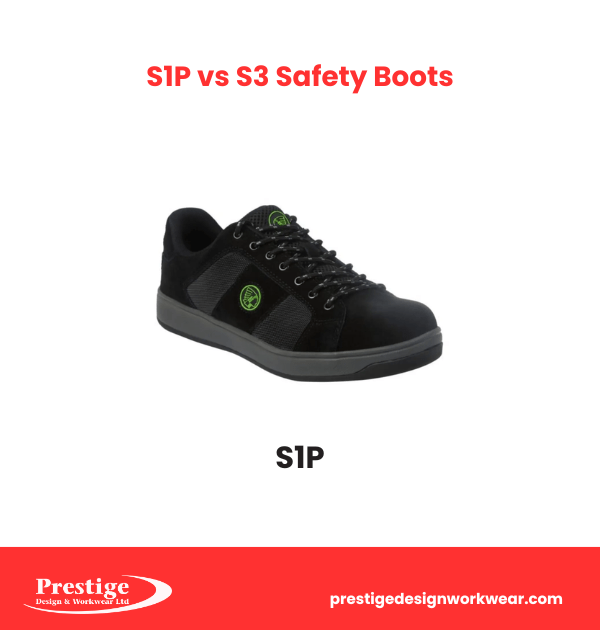
S1P safety boots are typically designed for indoor or dry working environments.
They include:
- Steel or composite toe cap
- Anti-static protection
- Energy absorption in the heel
- Penetration resistant midsole
- Oil resistant outsole
However, S1P boots are not waterproof.
When S1P Boots Are Suitable
S1P boots are often appropriate for:
- Warehouses
- Indoor manufacturing
- Workshops
- Dry environments
- Logistics centres
If your team works primarily indoors in Bedford, Milton Keynes or Luton warehouses, S1P may be sufficient provided water exposure is not a risk.
What Are S3 Safety Boots?
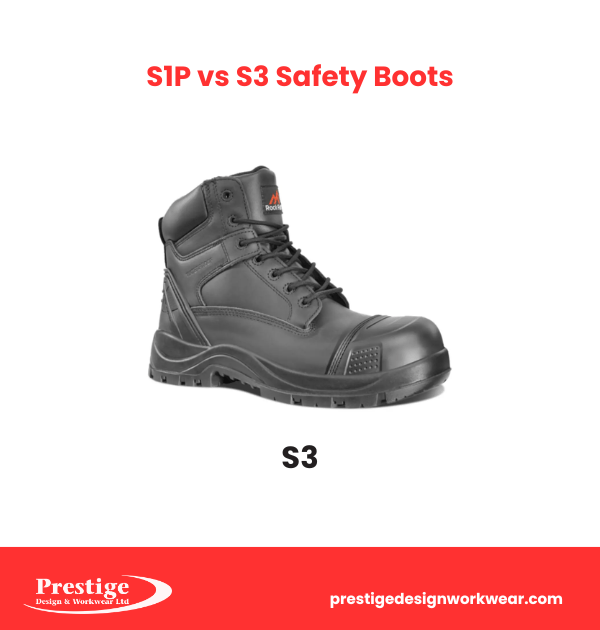
S3 safety boots include everything in S1P plus one crucial addition:
- Water resistance (WRU rated upper)
This means they are designed to resist water penetration and keep feet dry in wet conditions.
They also include:
- Penetration resistant midsole
- Slip resistant outsole
- Durable outer construction
When S3 Boots Are Required
S3 boots are strongly recommended for:
- Construction sites
- Outdoor trade work
- Utilities & infrastructure
- Landscaping
- Agricultural environments
Across Bedfordshire and surrounding counties, unpredictable weather and muddy site conditions make S3 boots the safer choice for most outdoor roles.
The Key Difference: Waterproofing
The main difference between S1P and S3 is water resistance.
S1P:
- Suitable for dry conditions
- Not water resistant
S3:
- Designed for wet environments
- Suitable for muddy and outdoor sites
For construction teams working year-round, S3 is often the more practical long-term investment.
Do You Legally Need S3 Boots?
There is no blanket rule stating “S3 is mandatory.”
The correct rating depends on:
- Site-specific risk assessment
- Exposure to water
- Ground conditions
- Employer policy
- Client requirements
However, many UK construction sites default to S3 as standard due to environmental conditions.
Steel Toe vs Composite Toe
Both S1P and S3 boots may include either:
- Steel toe caps
- Composite toe caps
Steel:
- Traditional
- Extremely strong
- Slightly heavier
Composite:
- Lightweight
- Non-metallic
- Ideal for environments requiring metal free footwear
The S rating relates to overall protection level not the toe material itself.
Comfort & Long-Term Wear
Beyond compliance, consider:
- Arch support
- Shock absorption
- Breathability
- Weight
- Sole flexibility
A comfortable boot reduces fatigue especially for teams on their feet all day.
For construction workers across Beds, Herts & Bucks, durability and comfort are equally important.
Branding & Uniform Consistency
While footwear itself is not typically branded, it forms part of a cohesive uniform system including:
- Hi-vis clothing
- Waterproof outerwear
- Branded mid-layers
Ensuring your team’s footwear matches site requirements maintains professionalism and compliance.
Safety Footwear Across Bedfordshire, Hertfordshire & Buckinghamshire
We supply compliant safety footwear across:
- Bedford
- Luton
- Milton Keynes
- Hemel Hempstead
- St Albans
- Aylesbury
With collection available from Barton and Flitwick.
Choosing the right safety boot protects your workforce and ensures compliance with UK regulations.
Frequently Asked Questions
Is S3 better than S1P?
Not necessarily “better” but more suitable for wet environments.
Can I wear S1P boots on a construction site?
Only if site conditions and risk assessments allow it.
Are S3 boots always waterproof?
They are water-resistant, not fully submersible waterproof.
Do all safety boots have steel toes?
No many use composite toe caps.
Final Thoughts
Choosing between S1P and S3 safety boots comes down to environment.
If your team works indoors in dry conditions, S1P may be suitable.
If your team works outdoors in unpredictable UK weather, S3 is often the safer and more practical option.
Understanding the difference protects both your workforce and your business.